+1 737-334-0737
Call Us
+1 737-334-0737
AI Services for Measurable Business Growth
Artificial intelligence services help companies move beyond early-stage pilots and turn AI into a real engine for growth. We design and build custom solutions that automate complex workflows, sharpen decision-making, elevate customer experiences, and deliver quantifiable business results. From initial strategy and model development through full-scale integration and continuous optimization, our team builds AI systems around your actual operational goals — not generic use cases.
Our Artificial Intelligence Services
We offer end-to-end artificial intelligence services focused on building solutions that are practical, scalable, and ready for real business environments. From strategy through deployment and optimization, we help organizations convert AI potential into measurable outcomes.
AI Strategy
We identify the right AI opportunities for your business, align them with your strategic goals, and develop a clear, actionable implementation roadmap.
Custom AI Development
We build tailored artificial intelligence solutions designed around your specific workflows, data infrastructure, and operational requirements.
Generative AI
We develop generative AI applications for content creation, knowledge management, intelligent automation, and enhanced user interactions.
Machine Learning
We design and train machine learning models that power prediction, classification, optimization, and data-driven decision-making across your organization.
AI Agents & Automation
We build autonomous AI agents and intelligent workflows that reduce manual effort while improving speed, consistency, and operational efficiency.
NLP Solutions
We develop natural language processing systems for conversational AI, text analysis, semantic search, summarization, and language-based automation.
Computer Vision
We create computer vision solutions that process images and video for object recognition, detection, quality inspection, and real-time monitoring.
AI Integration & Support
We connect AI capabilities to your existing systems and provide ongoing maintenance, performance monitoring, and continuous improvement.
AI Solutions We Build for Business Needs
We build practical artificial intelligence solutions that help businesses automate operations, improve decision-making, personalize customer experiences, and extract more value from their data. Every solution is tailored to your specific workflows, technology environment, and growth objectives.
AI Assistants & Chatbots
Intelligent assistants and chatbots that handle customer communication, internal support, and high-volume request management at scale.
Personalization Engines
Systems that adapt content, offers, and digital experiences to individual users based on behavior, preferences, and interaction history.
Predictive Analytics
Tools that transform historical and real-time data into actionable insights, supporting smarter planning, risk management, and confident decisions.
Document Processing
Automated solutions that extract, structure, and organize information from contracts, invoices, forms, and other business documents — eliminating manual data entry.
AI Search Systems
Intelligent search tools that make internal knowledge easier to access through semantic retrieval, contextual ranking, and relevance-driven results.
AI Automation Tools
Workflow automation solutions that reduce repetitive tasks, support teams with routine processes, and improve consistency across operations.
Business Benefits of Artificial Intelligence Services
Artificial intelligence services help organizations improve efficiency, reduce operational friction, and generate more value from their data, people, and processes.
AI reduces the time teams spend on repetitive, time-consuming tasks by automating routine actions and streamlining internal workflows. This eliminates common bottlenecks, cuts administrative overhead, and allows employees to focus on higher-value, strategic work. Organizations see faster turnaround times and more efficient use of human capacity.
AI improves consistency and reduces the risk of human error in high-volume, precision-sensitive workflows. Whether processing documents, handling data, or managing requests, AI delivers more reliable and standardized outputs. Over time, this accuracy translates into higher service quality, fewer costly mistakes, and more stable operations.
AI makes it easier to convert large data sets into clear, timely insights. It surfaces patterns, flags anomalies, and supports leadership with relevant information exactly when it is needed. Businesses can respond faster to market shifts, evaluate opportunities with greater clarity, and reduce uncertainty in planning and forecasting.
AI supports automation not just within a single function, but across multiple teams and business units simultaneously. It standardizes processes, connects workflows, and sustains efficiency even as the organization grows. This makes it possible to scale operations without a proportional increase in overhead or complexity.
AI enables faster, more relevant, and more consistent interactions across every customer touchpoint. It elevates support quality, enables personalization at scale, and reduces friction in digital channels. Customers benefit from smoother communication, quicker resolutions, and experiences that feel tailored to their needs — driving stronger loyalty and retention.
Organizations that effectively adopt artificial intelligence can move faster, operate more efficiently, and respond to market demands with greater agility. AI enables product innovation, service optimization, and operational improvements that competitors without AI capabilities cannot easily replicate. This strengthens market positioning and builds a foundation for sustained long-term growth.
Artificial Intelligence Services Across Key Industries
We deliver artificial intelligence services tailored to the specific needs, workflows, and challenges of each industry we work with. Our solutions help businesses improve efficiency, automate operations, enhance decision-making, and unlock new growth opportunities.
Healthcare
Finance and Insurance
Retail and eCommerce
Manufacturing
Logistics and Supply Chain
Real Estate
Energy and Utilities
Media and Entertainment
AI Use Cases and Success Stories
AI for Customer Support Automation

65%
of routine support requests automated
Predictive Analytics for Demand Planning
Improving retail planning with smarter forecasting based on connected business data

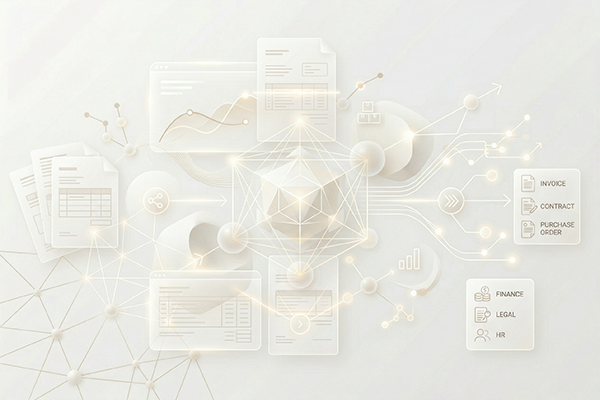
Intelligent Document Processing
80%
reduction in manual document handling time
Technologies Behind Our Artificial Intelligence Services
Delivering a high-performing AI solution requires the right combination of frameworks, data infrastructure, cloud platforms, and enterprise integrations.
LLMs and Generative AI Frameworks
Tools for building intelligent assistants, content generation pipelines, enterprise knowledge systems, and advanced language-based applications.
Machine Learning and Deep Learning Tools
Frameworks for building predictive models, automating complex analysis, and solving data-intensive business problems.
Data Engineering and MLOps Stack
Infrastructure for data preparation, model training, deployment, monitoring, and reliable AI performance at production scale.
Cloud Platforms and AI Infrastructure
Secure, scalable environments for training, running, and expanding AI solutions across your business operations.
APIs, Integrations, and Enterprise Systems
Technologies that connect AI capabilities to your existing software, workflows, CRM, ERP, and core business platforms.
Let’s Build the Right AI Solution for Your Business
Turn your AI vision into a practical business advantage with a team focused on strategy, development, and real-world results. Contact us to discuss how artificial intelligence services can support your growth, improve efficiency, and drive long-term innovation.
First Name
Last Name
Frequently Asked Questions
Artificial intelligence services cover the full scope of designing, building, integrating, and optimizing AI-powered solutions for business use. This includes AI strategy consulting, machine learning development, generative AI, natural language processing, computer vision, workflow automation, and AI system integration. The goal is to help companies solve specific business problems, streamline operations, and create measurable value with intelligent technology.
AI services help businesses automate time-intensive tasks, improve decision quality, reduce operational costs, and deliver better customer experiences. They enable faster processing of large data volumes, more accurate pattern recognition, and intelligent tools that support employees in their daily work. When implemented effectively, AI improves productivity, enables scale, and builds long-term competitive advantage.
Custom AI development typically covers business analysis, solution design, data assessment, model development, software engineering, system integration, testing, deployment, and ongoing optimization. Depending on the project scope, it may also include building AI agents, predictive models, recommendation systems, intelligent search tools, document automation, or computer vision applications. Every solution is shaped around the company’s specific workflows, goals, and technical environment.
Timelines vary based on solution complexity, data readiness, and integration requirements. A focused proof of concept may be completed in a few weeks, while a full-scale enterprise AI platform can take several months to build and deploy. Discovery, data preparation, model development, testing, and deployment all contribute to the overall timeline. A well-defined project scope is one of the most effective ways to accelerate delivery and reduce risk.
Cost depends on the type of solution, project scope, data readiness, infrastructure requirements, and integration complexity. A focused prototype typically costs significantly less than a multi-model enterprise platform. Ongoing expenses such as model retraining, cloud usage, and system support also factor into the total investment. Most engagements are scoped based on business objectives, required features, and the scale of implementation.
Yes. AI can be integrated into most existing software platforms and business workflows, including CRM, ERP, eCommerce systems, internal dashboards, customer support tools, and other enterprise applications. Proper integration ensures that AI enhances real operational processes rather than functioning as a disconnected add-on. This approach accelerates adoption and helps organizations get practical value from AI faster.
AI services deliver strong results across industries characterized by large data volumes, repetitive processes, or the need for faster, more accurate decisions. Common examples include healthcare, financial services, retail, manufacturing, logistics, real estate, and customer-facing operations. Each industry applies AI differently — from demand forecasting and fraud detection to process automation and personalized experiences. The strongest outcomes come from solutions built around specific, well-defined business use cases.
Security and responsible AI adoption require robust data protection, controlled access management, transparent model behavior, and continuous performance monitoring. A sound development process incorporates governance frameworks, regulatory compliance, bias mitigation, model validation, and appropriate human oversight. Aligning AI implementation with your organization’s policies and industry standards ensures that AI scales safely while maintaining trust, accuracy, and accountability across the business.